
Flatbed Trucking Dispatch
Flatbed Dispatch Services
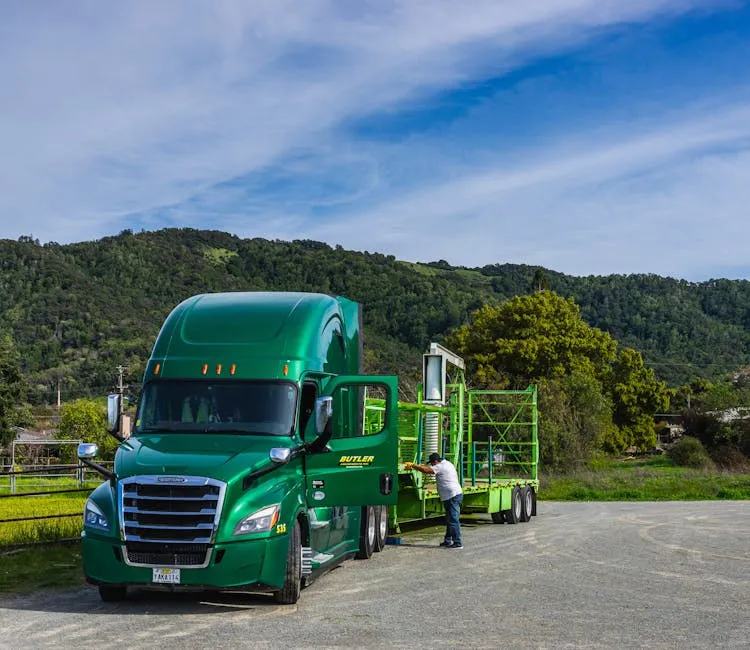
Open deck trailers (48-53 feet) for steel, lumber, machinery, and construction materials. Standard capacity: 48,000 lbs, dimensions 8.5' wide x 5' deck height. Requires chains, straps, tarps for securement. We find loads, negotiate rates, and handle broker verification so you can focus on driving.
March 2026 Flatbed Market:
$2.58
Spot Rate/mi
$3.02
Contract/mi
$5,100
Avg Weekly Gross
Flatbed Dispatch: 6%
Industry average is 10%. We charge less because we run lean.
Rate negotiation on every load
We push for top-of-market, not just "available"
No hidden fees or minimums
You only pay when we book loads
Broker vetting standard
FMCSA SAFER checks, payment history, references
80+
Carriers Served
50
States Covered
24/7
Dispatch Support
6%
Commission Only
What Flatbed Trucks Typically Haul
Common freight types for flatbed equipment:
Strong Flatbed Lanes
High-demand corridors for flatbed freight:
Market Reality Check
Maximize Your Earnings
Related Guides
Flatbed Dispatch by State
Select your state to learn about local flatbed freight markets and rates.
Northeast
Midwest
Southwest
Flatbed Trucking: What You Need to Know
Essential information about flatbed operations, rates, freight types, and how to maximize your earnings. Check current rates on DAT Trendlines and verify carrier authority on FMCSA SAFER.
What are flatbed trailer dimensions and weight capacity?
Standard flatbed trailers are 48-53 feet long, 8.5 feet wide, with deck height of 5 feet. Maximum legal cargo weight is 48,000 pounds (tri-axle trailers can haul 65,000 lbs). The trailer itself weighs 6,000-12,000 pounds. Step decks sit 3.5 feet off ground for taller freight. Lowboys sit 18-24 inches off ground for equipment up to 12 feet tall.
What are current flatbed rates per mile in February 2026?
February 2026 flatbed spot rates average $2.58 per mile, up 5 cents week-over-week and 41 cents higher than January 2025. Contract rates average $3.02 per mile. Flatbed load posts are running 60% higher than last year and 35% above long-term average. Manufacturing PMI returned to expansion (52.6) in January 2026, supporting flatbed demand.
How much do flatbed drivers get paid for tarping?
Tarping fees typically range $75-100 per tarped load. Companies like Melton pay drivers $100 per tarp, adding roughly $10,000 per year to driver income. Shippers commonly pay $35-80 as an accessorial charge. Always negotiate tarping fees upfront - don't accept loads requiring tarps without compensation. We ensure tarping pay is included in every rate negotiation.
What are FMCSA flatbed securement requirements?
FMCSA requires minimum one tie-down for every 10 feet of cargo, with two tie-downs minimum for anything over 5 feet. Cargo must be 'firmly immobilized' using approved equipment: chains, straps, webbing, or wire rope. Steel tarps weigh 65+ lbs. Violations can result in out-of-service orders and fines. Washington state treats violations as gross misdemeanors.
What is the best flatbed freight in 2026?
Top-paying flatbed freight in 2026: steel for data centers, power grid infrastructure, energy projects, and industrial buildouts. These sectors are less interest-rate sensitive than housing. Hot lanes include Texas, Alabama, and Gulf/Mid-South corridors for steel and industrial freight. Housing-related freight (roofing, trusses, drywall) is softening - diversify into commercial and infrastructure work.
Does flatbed trucking pay more than dry van?
Yes, flatbed typically pays $0.20-0.50 more per mile than dry van. At 120,000 miles/year, flatbed at $2.58/mile grosses roughly $309,000 versus $294,000 for dry van at $2.45/mile - about $15,000 more annually. However, flatbed insurance costs $11,000-12,000/year (vs $7,000-9,500 for dry van) and involves more physical labor. The trade-off: higher pay for harder work.
Flatbed Dispatch FAQ
Common questions about our flatbed dispatch services.
What are current flatbed rates per mile in 2026?
As of March 2026, flatbed spot rates average $2.58/mile nationally, with contract rates around $3.02/mile. Rates vary significantly by lane - Texas steel corridors tends to pay above average, while oversaturated lanes pay less. Check DAT Freight & Analytics (dat.com) for real-time lane-specific rates. We track rate trends daily and push for top-of-market pricing on every load we book. See our rate negotiation guide for tactics that add $0.25+/mile.
What freight do flatbed trucks typically haul?
Flatbed trailers commonly haul: Steel coils and sheets, Lumber and building materials, Heavy machinery, Construction equipment, Wind turbine components, Pipe and structural steel, Data center equipment, Solar panels. The specific freight you'll run depends on your lanes and the relationships we build with shippers. Some loads pay better than others - we'll help you understand which freight types maximize your revenue per mile. Our owner operator costs guide breaks down how different freight affects your bottom line.
Is flatbed trucking profitable right now?
February 2026 flatbed spot rates at $2.58/mile, up 41 cents year-over-year. Load posts running 60% higher than last year. Physical work - tarping ($75-100 per load), strapping, and securement adds time. Best freight in 2026: steel for data centers, energy infrastructure, power grid projects. Housing freight softening; diversify into industrial/commercial. At current rates ($2.58/mi spot, $3.02/mi contract) and diesel around $3.50/gallon, flatbed can gross roughly $5,100/week running 2,000+ miles. After fuel, insurance, and maintenance, net depends heavily on your cost structure. According to ATBS data, average owner-operator net income is $64,524/year. Carriers with paid-off equipment net significantly more. See our operating costs breakdown for detailed expense analysis.
What are the best lanes for flatbed freight?
Strong flatbed lanes include: Texas steel corridors, Gulf Coast industrial, Alabama steel mills, Midwest manufacturing, Pacific Northwest lumber, Carolinas construction. The "best" lane depends on where you want to home time and whether you're running OTR or regional. Use DAT's Rate Pro or Truckstop Rate Analysis to compare lane-specific rates. We'll work with your preferences to find consistent freight in lanes that make sense for your schedule.
Why is flatbed dispatch 6% instead of a flat fee?
Percentage-based dispatch aligns our incentives with yours - we only make more when you make more. At 6%, we're motivated to negotiate higher rates rather than just fill your truck with whatever's available. Industry average is 10%, we're at 6% because we keep overhead low. No hidden fees, no weekly minimums. View our complete pricing breakdown for full transparency.
Other Dispatch Services
Learn more: Read our complete Flatbed glossary guide for equipment specs, typical freight, and industry terminology.
Trucking Guides
Broker Verification
Protect yourself from freight fraud
Operating Costs Guide
Know your true cost per mile
Rate Negotiation
Get better rates from brokers
Detention Pay
Compensation for waiting time
Layover Pay
Overnight wait compensation
Factoring
Get paid in 24 hours
TONU
Canceled load fee protection
Accessorial Charges
All trucking extra fees
Broker Credit Check
Check broker payment history
Cost Per Mile
Calculate your true operating cost
Fuel Advance
Get fuel money before delivery
Deadhead Miles
Reduce costly empty miles
Rate Confirmation
Protect yourself with proper docs
Dispatcher
What truck dispatchers do
Spot Market
On-demand freight marketplace
Load Board
Find available freight
Owner Operator
Independent trucker guide
MC Authority
Your operating authority
Also from O Trucking
Looking for a Driving Job?
CDL and non-CDL positions available. All equipment types, all 50 states.
Browse Driver Jobs →Need to Hire Drivers?
Pre-screened CDL drivers matched in 2-3 days. Only $500 per placement.
Post a Job — Free →Need a Website?
Free professional website design for any business. Hosting just $150/year.
Get Free Website →Ready to Start Flatbed Dispatching?
Join owner-operators across America who trust O Trucking for their flatbed dispatch needs.